
Insights
“Do Humanitarians Need the Private Sector at All?” – Notes from the IC Forum Geneva 2026
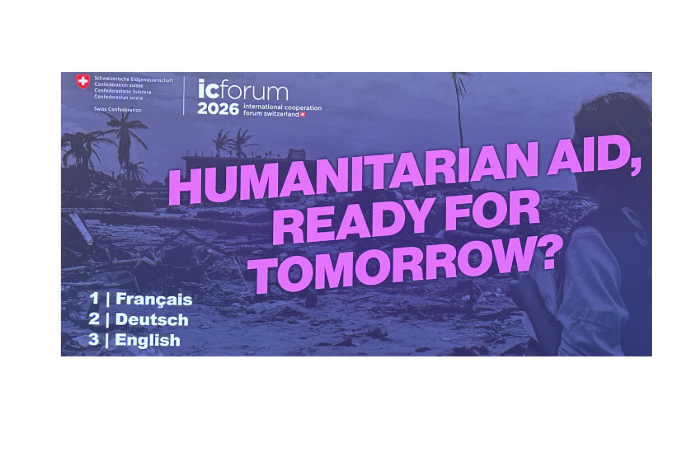
Last week of February, Arche attended the 5th edition of the IC Forum, organized by the Swiss Agency for Development and Cooperation (SDC) in Geneva.
What could a private sector company take away from this high-level forum?
Suppliers versus corporate donors?
The main debate on the “role of the private sector” — moderated by the Swiss State Secretariat for Economic Affairs (SECO), with guests from Impact Fund, the African Bank and private sectors experts for non-profit organisations — opened with the following statement: “Do we need the private sector at all?”
There are around 29,000 awarded suppliers who provided goods and services to the UN in 2024 (source: UN Procurement Annual Supply Report), probably 1.5 times this much when adding those who supplied the NGOs.
That should answer the question pretty quickly.
The main interest for Humanitarians seemed to be in how the private sector could finance humanitarians or humanitarian actions, as reflected in the rise of impact funds, crypto, blockchain, and the growing interest in impact ventures (check Omia success story) — companies with social impact built into their business model from the start.
When it comes to suppliers, the main concern of humanitarians (at least at this forum) is misalignment.
And yet, the fact that humanitarian and private sector goals differ doesn’t mean the relationship will always be stuck at arm’s length.
For large companies where Aid & Relief represents only a fraction of their business, non-monetary engagement makes sense, which they mostly operate through the company’s foundation or CSR/marketing budget: think CMA CGM Foundation, Airlink and pro bono flights…
What about local & regional SMEs ?
- OCHA’s Connecting Business Initiative — enables private sector entities of all sizes to contribute financially, in-kind, or through coordination during sudden-onset emergencies
- UN Global Compact — a pledge-based alignment to ten principles covering child labor, anti-corruption, decent work, and ethical conduct
As a closing note: while humanitarians are genuinely keen to engage the private sector, the conversation tends to gravitate toward large multinationals.
The voice of small and medium enterprises — local and regional actors who form the backbone of the humanitarian supply chain — their requirements to engage, and the real cost of compliance (time, money) do not seem to be part of the discussion yet.