
Insights
Why Supplier Coaching Matters for Humanitarian Operations
A sector under pressure
The humanitarian sector is navigating one of its most difficult periods.
Global funding for coordinated response dropped from $25 billion in 2023 to $15 billion in 2024 — a 40% decline in a single year, even as crises deepened and needs multiplied. Procurement teams are stretched. Budgets are tighter. And yet the expectation to deliver effectively, compliantly, and at scale has not changed.
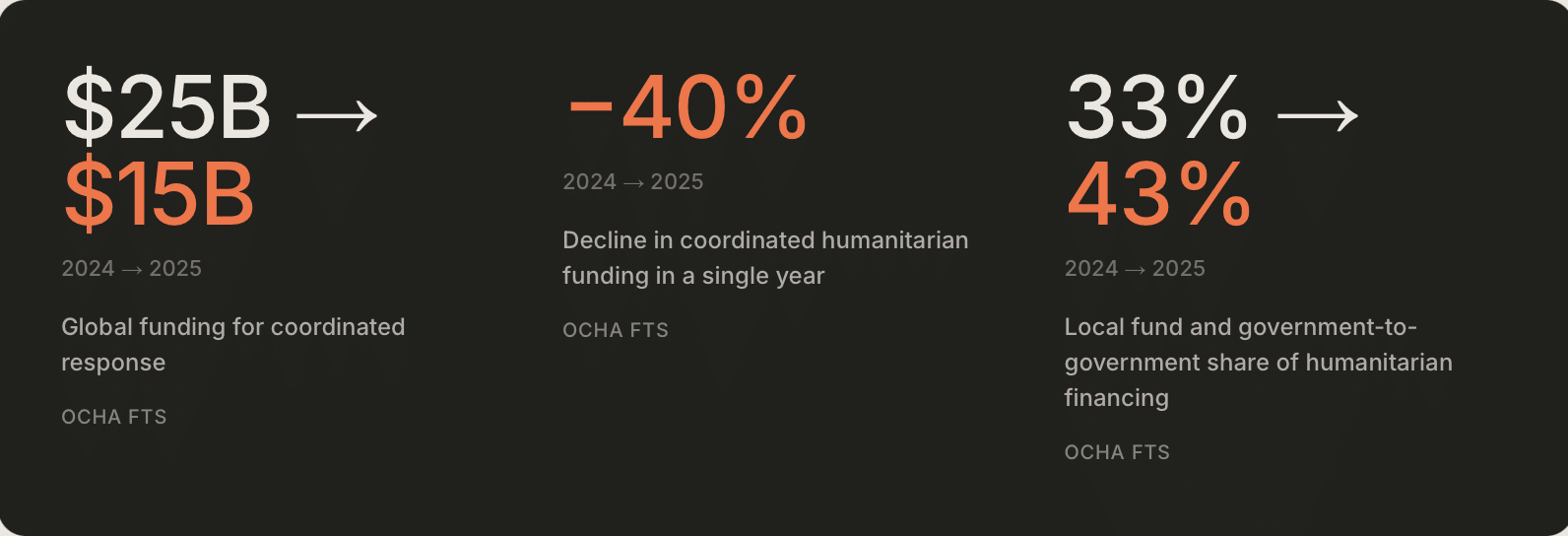
In this environment, something long understood in theory is now urgent in practice: local and regional suppliers are not optional — they are essential. Donors increasingly require it. Local fund and government-to-government funding mechanisms now account for 43% of humanitarian financing, up from 33% in 2024,1directing resources closer to where crises occur.
For humanitarian organizations already operating under immense pressure, this creates both a necessity and an opportunity: to build resilient, compliant supply chains anchored by capable local and regional vendors.
The local supply chain is part of the answer. But only if local suppliers are able to participate. Too often, capable vendors remain excluded by fragmented procurement systems, limited visibility of tenders, burdensome onboarding requirements, or lack of access to the networks where opportunities emerge.
The barrier is not capability — it is familiarity
Across East Africa and the MENA region, there are thousands of competent, values-aligned local vendors operating in construction, logistics, food supply, healthcare, and utilities — the very sectors humanitarian organizations rely on most.
Yet many have never successfully tendered for a UN or NGO contract. Not because they lack the product, service quality or the production capacity, but because humanitarian procurement differs fundamentally from the commercial world.
It has its own language, its own systems, and its own decision logic.
— On humanitarian procurement
The result is a missed opportunity on both sides. Humanitarian organizations miss out on capable local suppliers who could deliver faster, more cost-efficiently, and with stronger local context. Meanwhile, local vendors miss access to contracts that could transform their businesses and create long-term economic growth.
What supplier coaching is — and how Arche helps
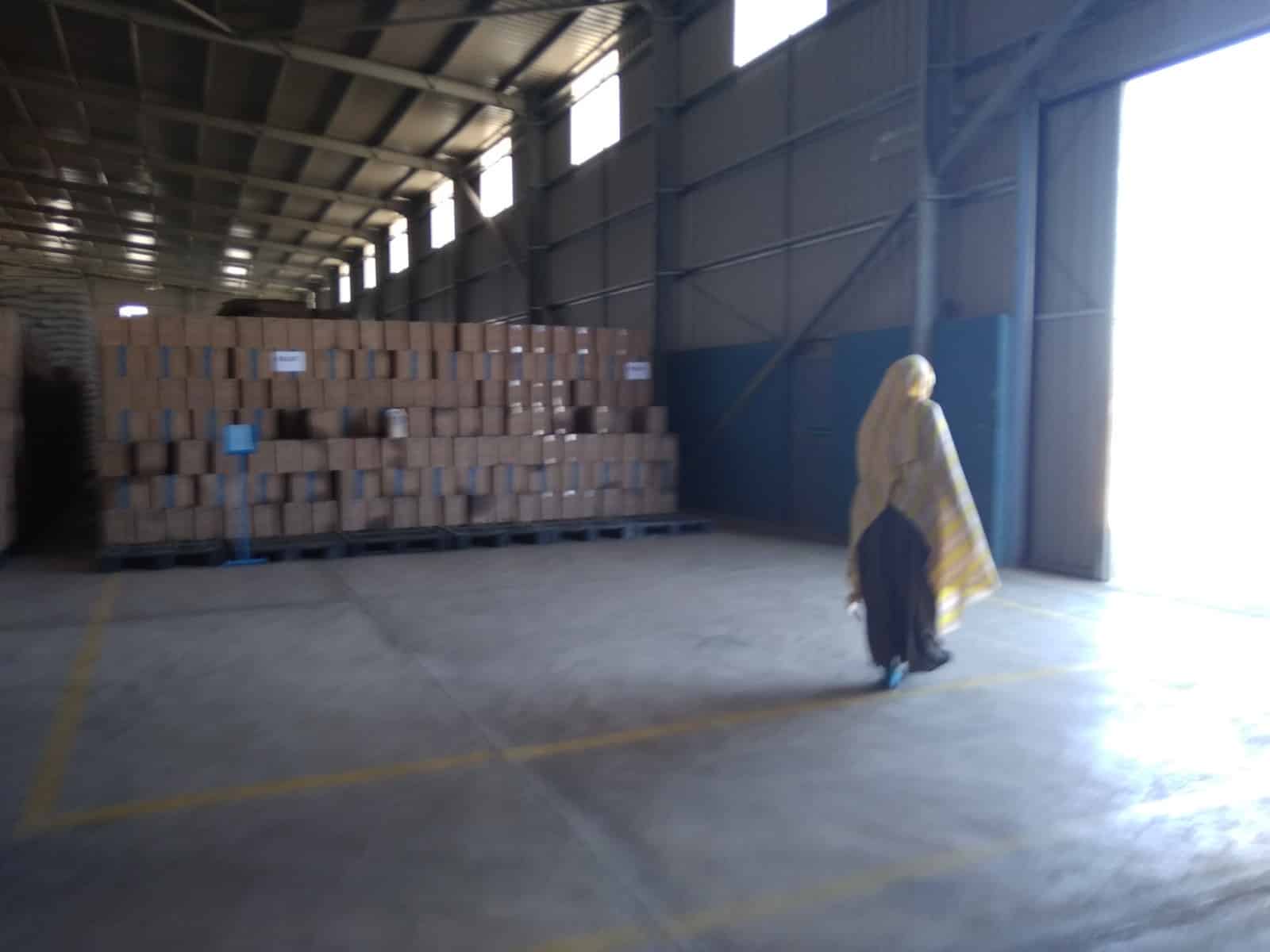
Supplier coaching is a straightforward idea: equipping local and regional vendors with the knowledge and practical tools to understand how humanitarian procurement works, and supporting them in becoming credible participants within the system.
We believe that lowering the barrier to entry for capable local vendors is in everyone’s interest — it creates a more competitive, resilient, and locally anchored supply base that ultimately strengthens humanitarian response.
Our coaching work focuses on three things:
01 - Identifying and vetting vendors
We map local markets, assess vendor capabilities, and verify that suppliers meet the baseline compliance and ethical standards humanitarian organizations require — from sanctions screening to conduct policies and organizational due diligence. This groundwork means humanitarian organizations can engage with Arche-vetted suppliers with greater confidence.
02 - Building procurement readiness
We guide vendors through the practical realities of humanitarian procurement: how to register on vendor platforms, what compliance documentation is required, how to read and respond to tenders, and how to position local relevance alongside international standards.
03- Fostering long-term partnerships
We connect vendors and organizations not only for immediate procurement needs, but to build relationships that serve both humanitarian delivery goals and sustainable local business growth. The aim is not a one-off contract — it is sustained participation in a more inclusive and effective supply ecosystem,
The bigger picture
Supplier coaching is often framed as support for vendors. But its impact runs in both directions.
Every capable local supplier that enters the humanitarian procurement ecosystem increases competition, helps reduce costs, and shortens delivery chains. It builds resilience in the very same markets where crises occur. It also reduces dependency on international suppliers who are often less responsive to local context, market realities, and operating conditions.
In a sector being forced to do more with less, a stronger local supply base benefits humanitarian organizations, donors, and the communities they serve.
Local sourcing is not only a matter of inclusion.
It is a matter of efficiency, resilience, and better humanitarian outcomes
About Arche
Arche is a boutique consultancy working at the intersection of the private and humanitarian sectors. We bring together a network of procurement specialists and private sector experts with deep experience across several humanitarian organizations. We currently work across East Africa and the MENA region in the sectors of engineering, construction, security, health, ICT, food, transport, and power supply.
Our supplier coaching programme supports local and regional vendors looking to engage with humanitarian organizations — and helps humanitarian professionals expand and strengthen their local vendor base.
For practical resources, procurement guidance, and updates for local vendors navigating the humanitarian ecosystem.
Follow Arche on LinkedIn ↗Sources
OCHA Financial Tracking Service